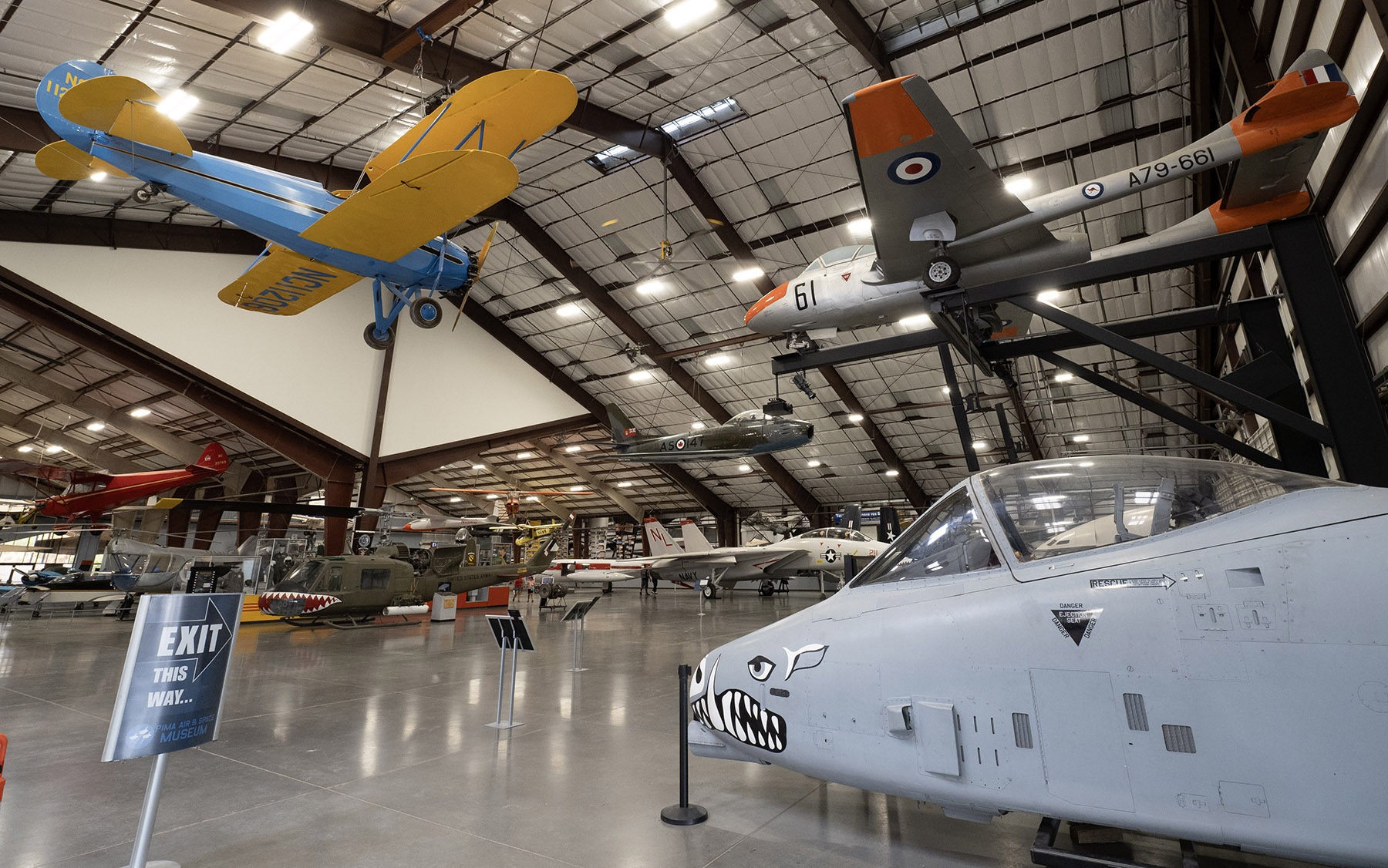
Hangar H1: A10 cockpit in the foreground with de Havilland Vampire and Waco RNF suspended immediately above. Further back on floor are UH-1 and F-14 with Canadian F-86 Sabre suspended above.
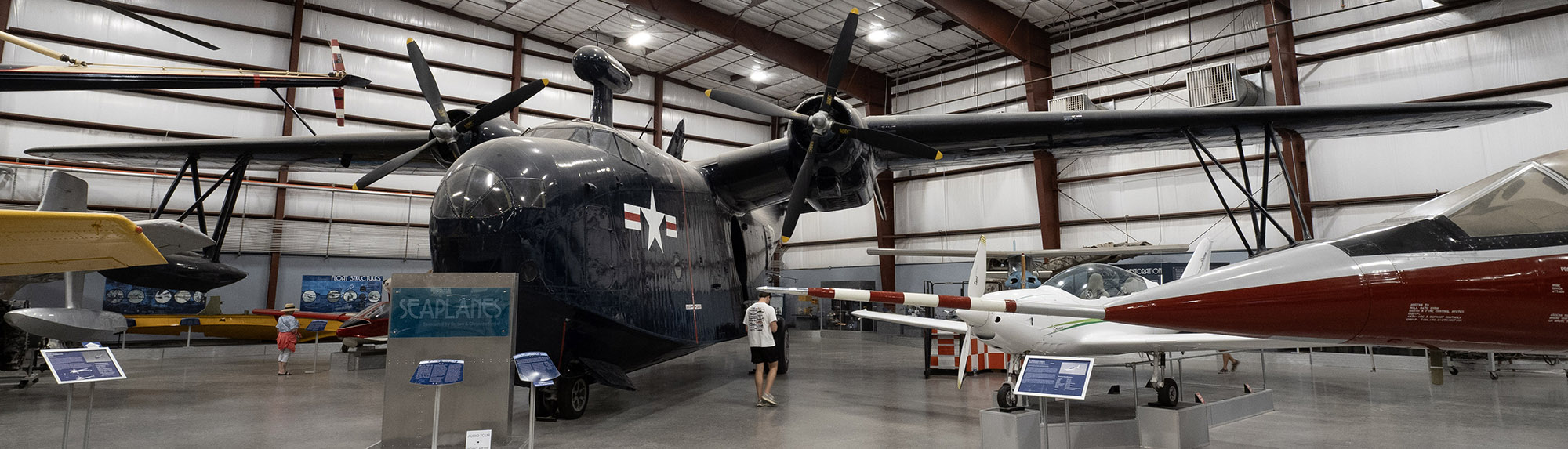
Martin PBM-5A Mariner. PBM's were built from 1937 through 1949 and were used in WW2 and the Korean War as long-range patrol, rescue and transport aircraft. They were responsible for sinking 10 U-boats during WW2. A total of 1,366 were built. This is the only surviving Mariner on loan from the National Air and Space Museum.
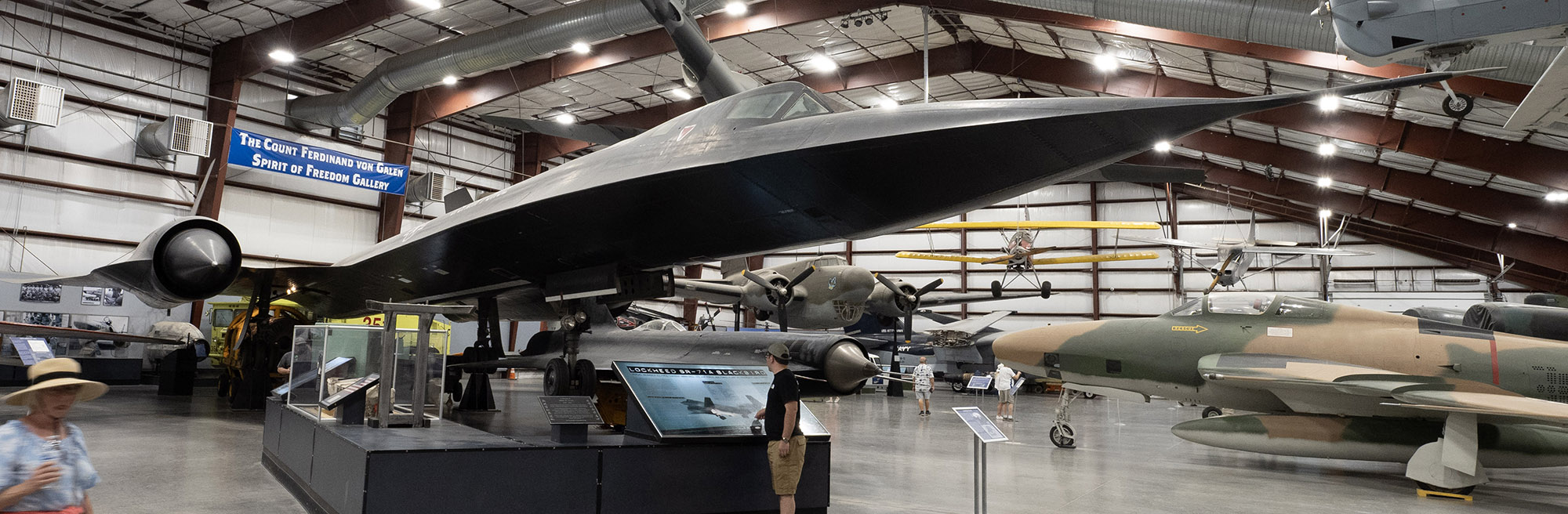 Lockheed SR-71A. Legendary and Sexy. Thirty of this reconnaissance type Mach 3+ aircraft were built and flew missions between 1964 and 1998. A D21 drone is below the SR 71. The front end of a RF-84 is to the right, and a twin engine B-18 is to the rear.
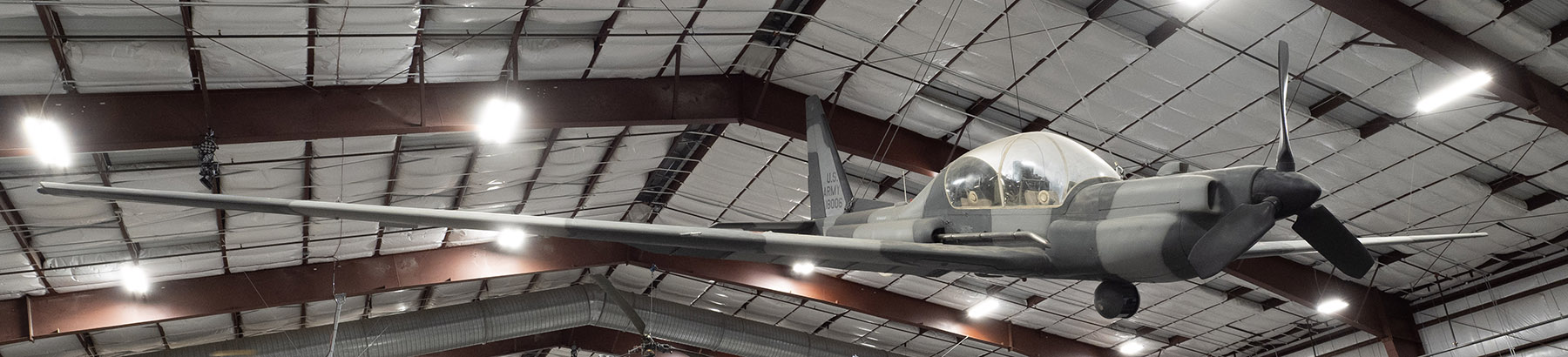 Lockheed YO-3A Quietstar was developed and flown during the Vietnam War to provide stealthy night observation of troop activity from 1,500 to 2,000 feet by an observer with night vision equipment. The muffled engine and modified three-blade propeller emitted relatively low noise which was undetected by troops below.
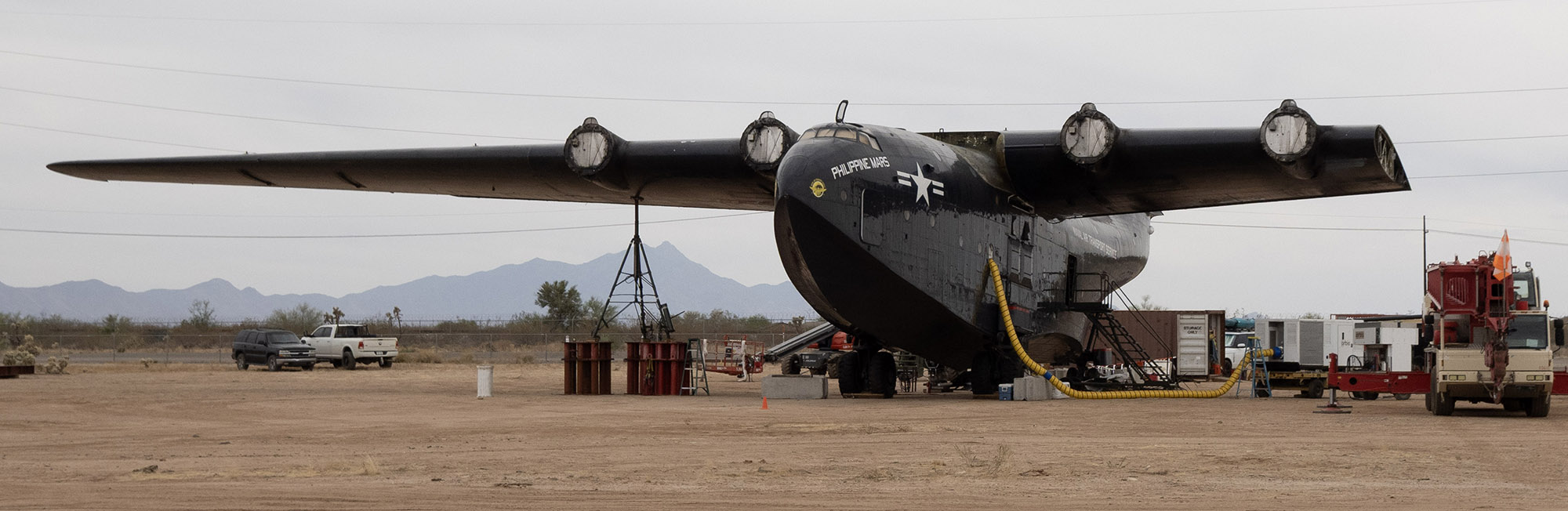 Philippine Mars being reassembled after having been flown from British Columbia to Alameda Seaplane base and then to Lake Pleasant in Arizona (167 miles from Pima Air and Space) where it was disassembled for truck transport to Pima. Seven Martin JRM Mars aircraft were built and used as Navy transports (1942-1956). Two survivors were used as fire-fighting water bombers in Canada. Philippine Mars was one of the two and was acquired for permanent display at Pima Air and Space Museum.
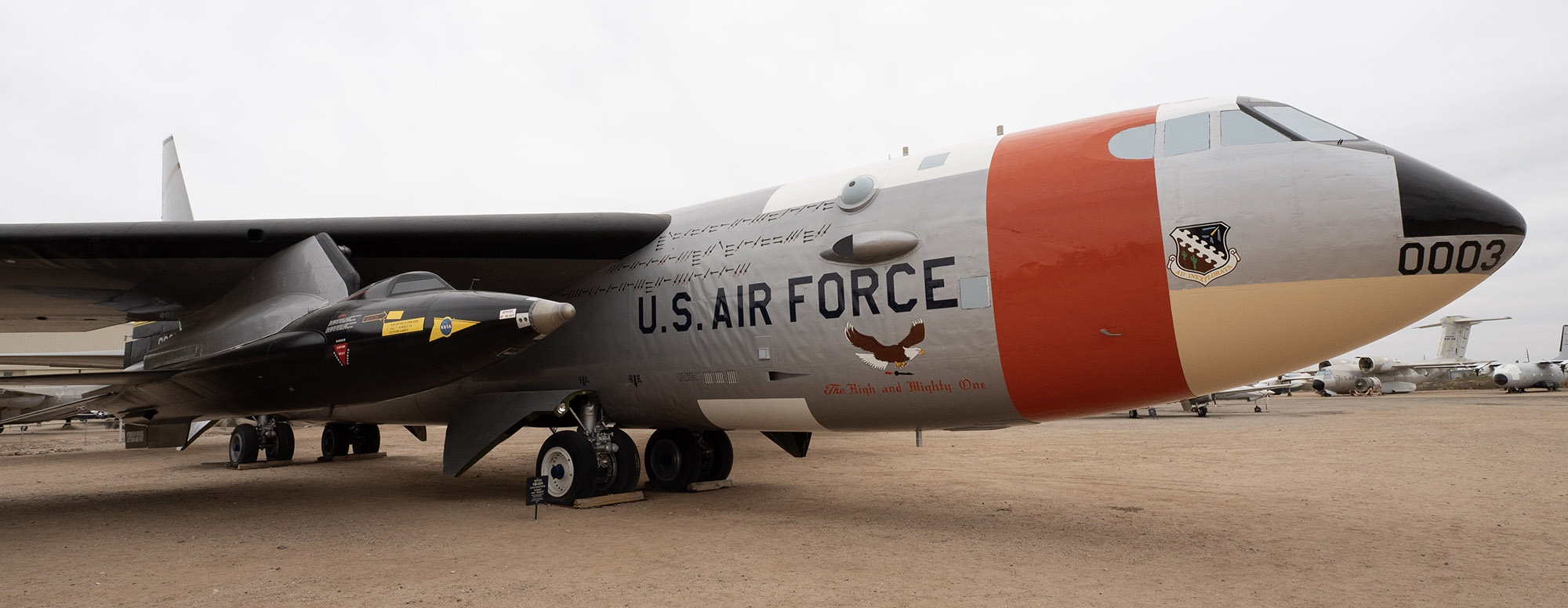 Boeing NB-52A with X-15 rocket aircraft. This is the last of three B-52A's that were built, and two were modified to carry experimental aircraft. The X-15 shown here is a replica. North American X-15's flew from 1959 through 1967 and set altitude and speed records and were used to develop data for aircraft and spacecraft design. Of the 744 B-52's built between 1952 and 1963 (Models A through H), only B-52H models are still flying after extensive modifications and renovations.
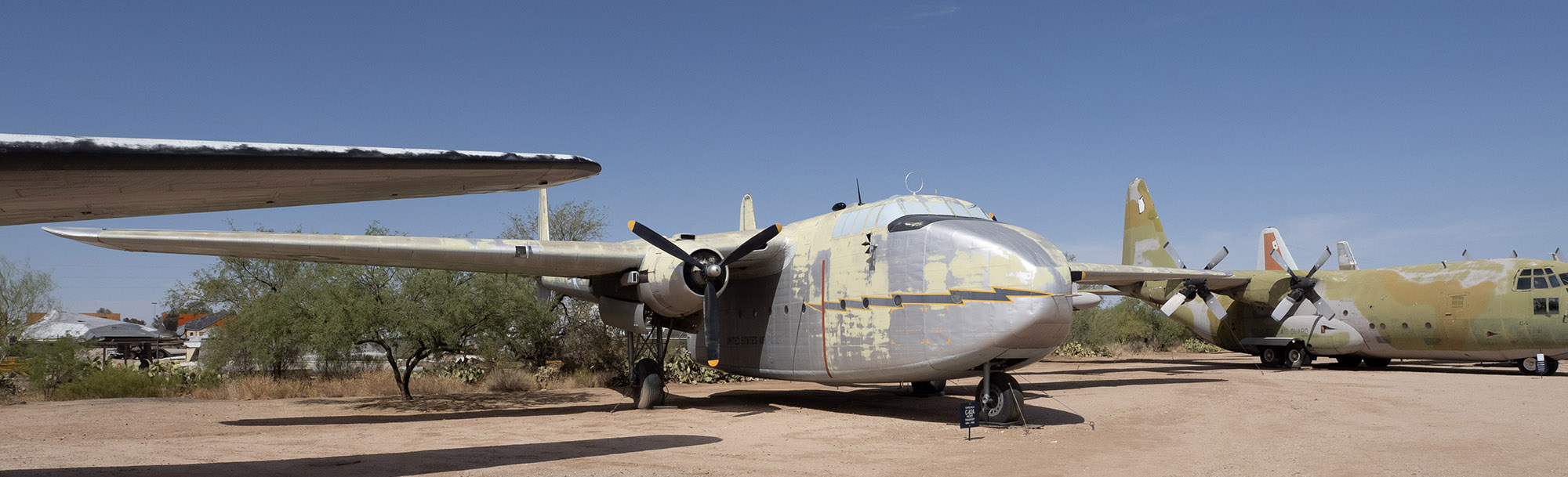 Fairchild C-82A Packet with Lockheed C-130 to the right. The C-82 was designed during WW2 to supercede heavy lift cargo function of C-46 and C-47 aircraft. It had twin boom tail, rear clam-shell doors that facilitated ground loading of vehicles and other cargo. 220 were produced between 1944 and 1948, and it was used extensively in the Berlin Airlift. Low power and less than desired ruggedness stimulated design of its successor, the C-119 Flying Boxcar.
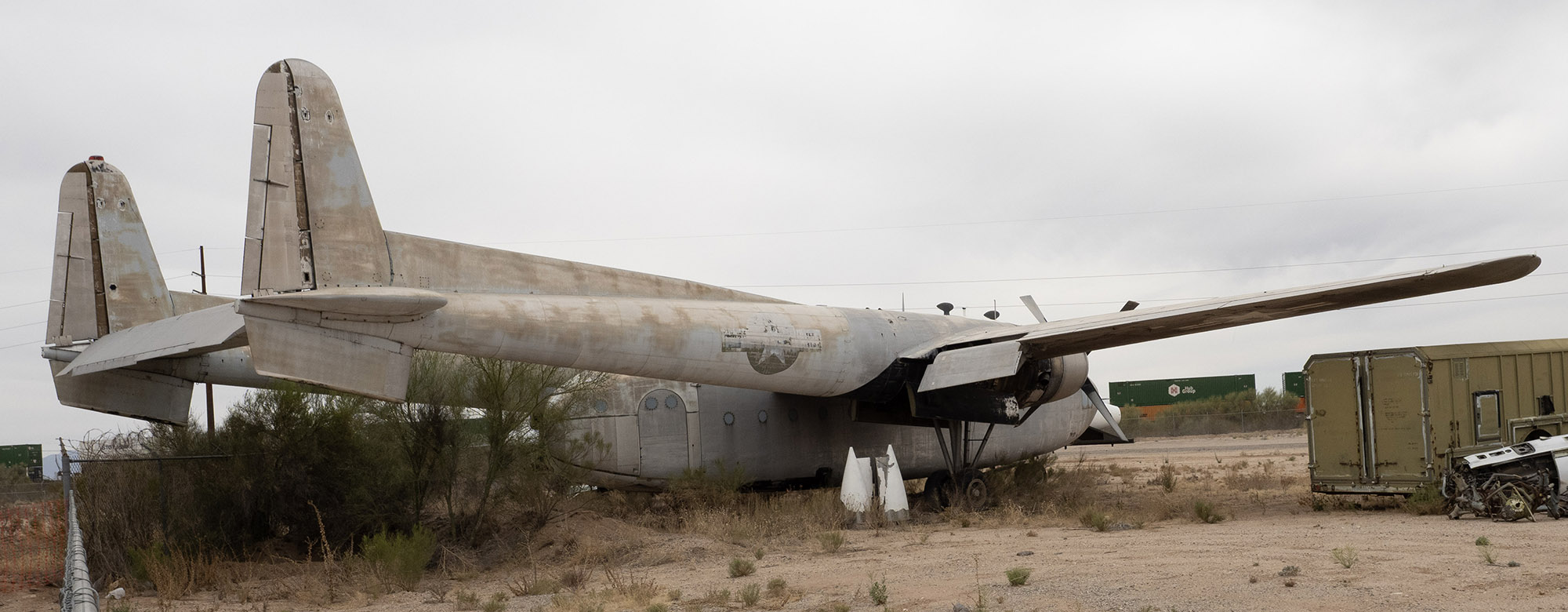 Fairchild C-119C Flying Boxcar. This C-119 is sitting in a fenced off storage lot and not on public display. I missed seeing the one converted as an aerial fire fighting aircraft in the Fire Fighter section on display. 1,183 C-119's were built between 1949 and 1955. They were used for troop and cargo transport, parachute drops and many other roles. Several were converted to gunships during the Vietnam war because of a shortage of C-130's for gunship conversion.
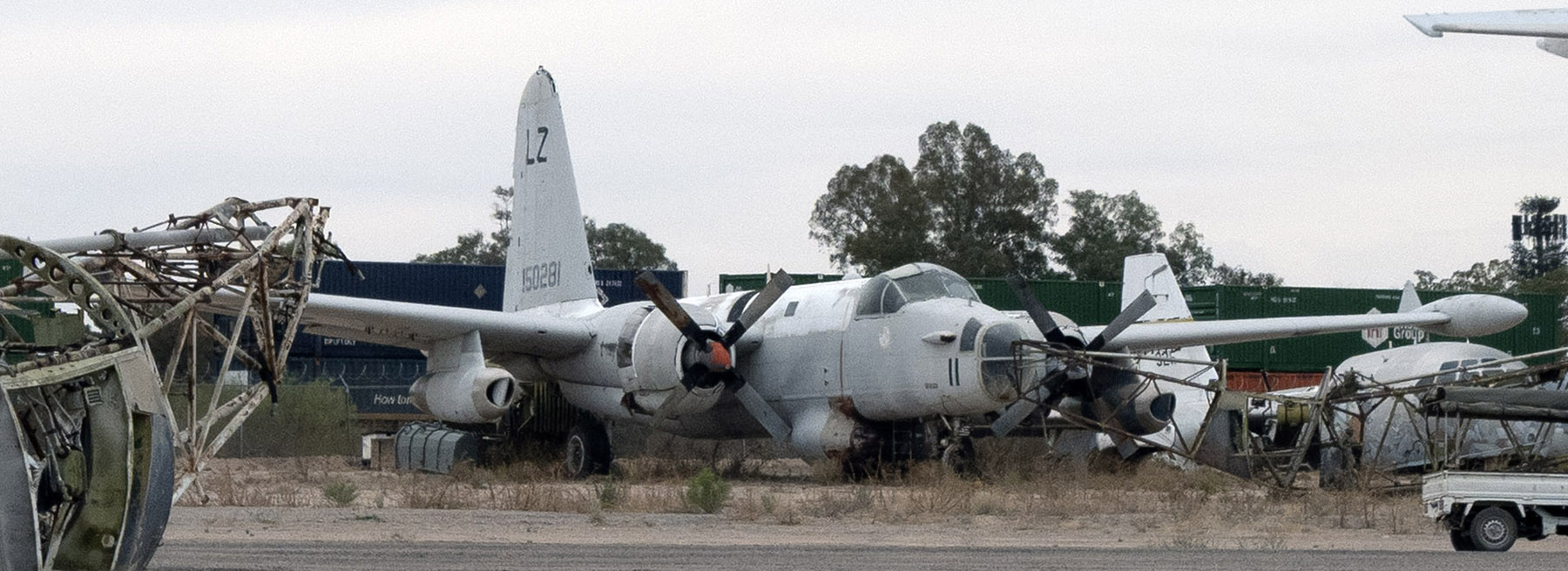 Lockheed P-2 Neptune sitting in the storage lot. This was the primary land-based anti-submarine patrol aircraft intended to operate with destroyers in hunter-killer groups beginning in 1947 until it was succeeded by the P-3 Orion in the mid 1960's. 1,177 aircraft were produced from 1947 through the 50's. Many were modified for other roles. The Museum has a AP-2H on exhibit which was heavily modified with sensors (FLIR and LLLTV), 20mm canons and minigun pods during the Vietnam war for hunter killer night missions along the Ho Chi Minh trail.
 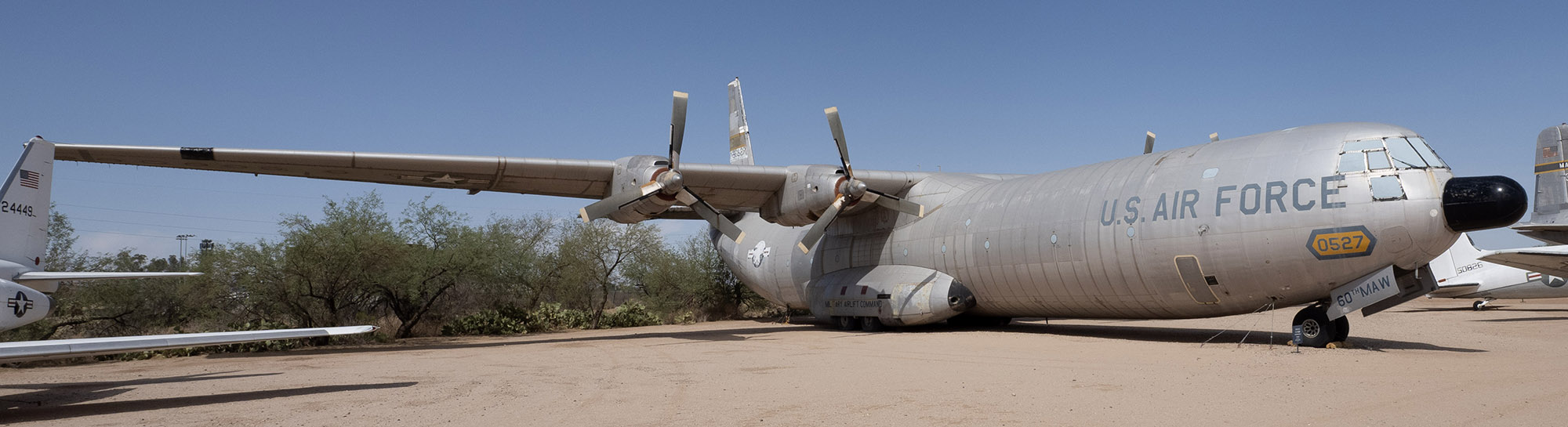 Douglas C-133 Cargomaster (1957-1970's) was the largest turboprop cargo plane built by the US and was designed to carry ballistic missles (Titan, Atlas, Minuteman). Only 50 were built. The long fuselage was susceptible to metal fatique. The C5A Galaxy replaced it.
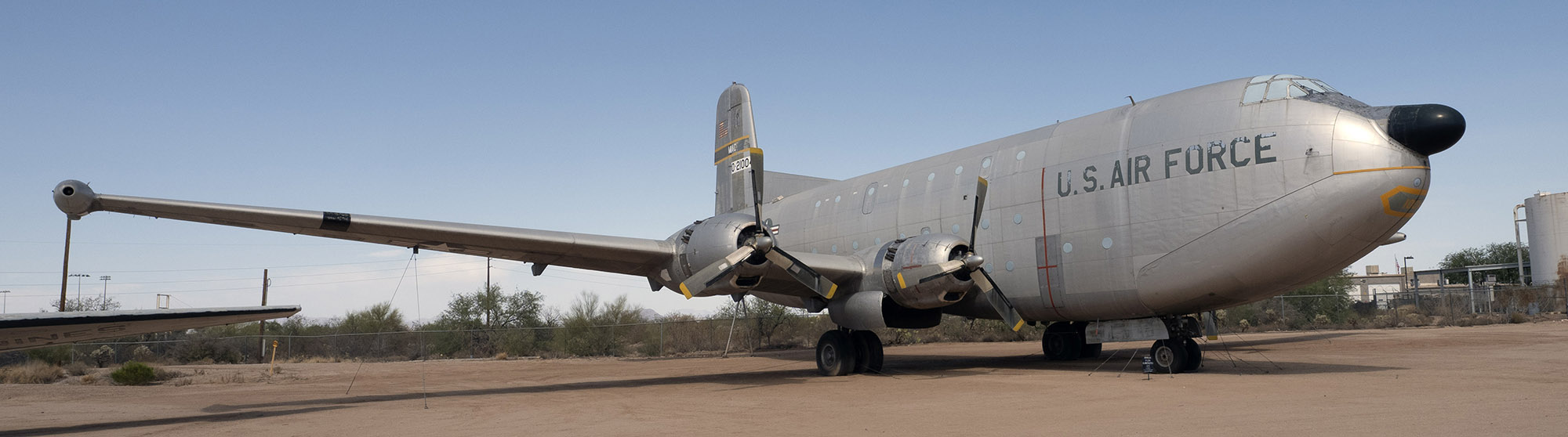 Douglas C-124 Globemaster was built as a heavy-lift cargo aircraft used between 1950 and 1974. 448 were built between 1949 and 1955, and they were extensively used during the Korean and Vietnam wars until replaced by C-141's and C-5A's. This aircraft had fabric-covered control surfaces and is of interest to me because my parents ran a company that replaced fabric surfaces of ailerons for C-124's in the late 1950's and early 1960's.
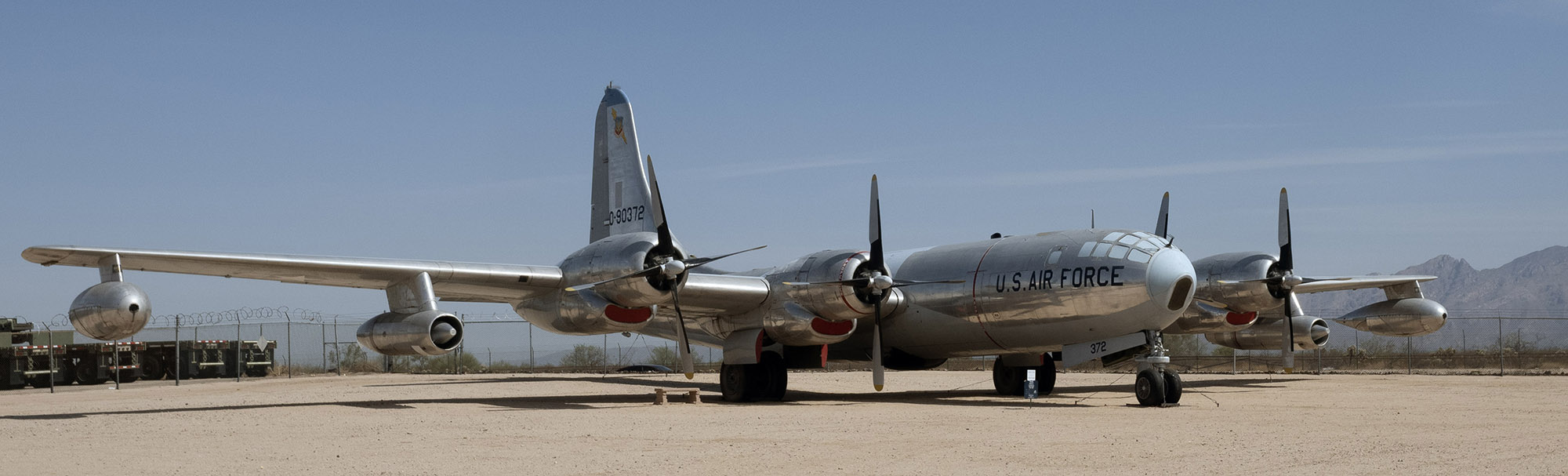 Boeing KB-50J Aerial Tanker. 370 B-50's were produced beginning in 1947 and were intended for use as nuclear bombers. The Soviet introduction of the Mig 15 jet fighter in 1950 made all slower propeller-powered bombers obsolete as deep penetration strategic bombers. As more capable jet bombers (e.g., B-47) came on line, B-50's were modified as tankers by being de-armed, fuel tank installation and addition of two J-47 turbojet engines to increase their speed so they could fuel faster jet fighters into the 1960's.
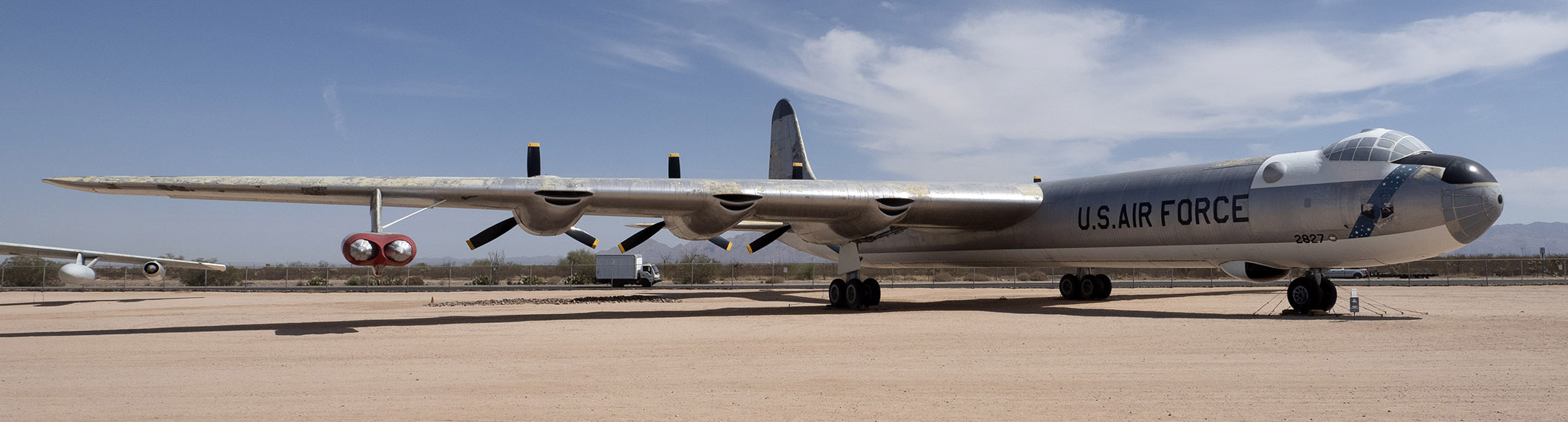 Convair B-36J, the largest bomber and last piston-engine bomber made by the United States. It was designed as a strategic, intercontinental bomber during WW2, but didn't fly until 1946. It was modified for nuclear bomb delivery and four J-47 turbojet engines were added for take off and high speed target area passage. 384 were produced between 1946 and 1954. It was the only bomber with the internal storage capacity to deliver a first generation Mark 17 hydrogen bomb. It was plagued by engine problems, and became obsolete as a deep penetration strategic offensive bomber when the Soviet Union deployed Mig 15's in 1950. The B-52 replaced it beginning in 1955, and most B-36's were scrapped when retired in 1959. The museum B-36J is the last one that came off the production line
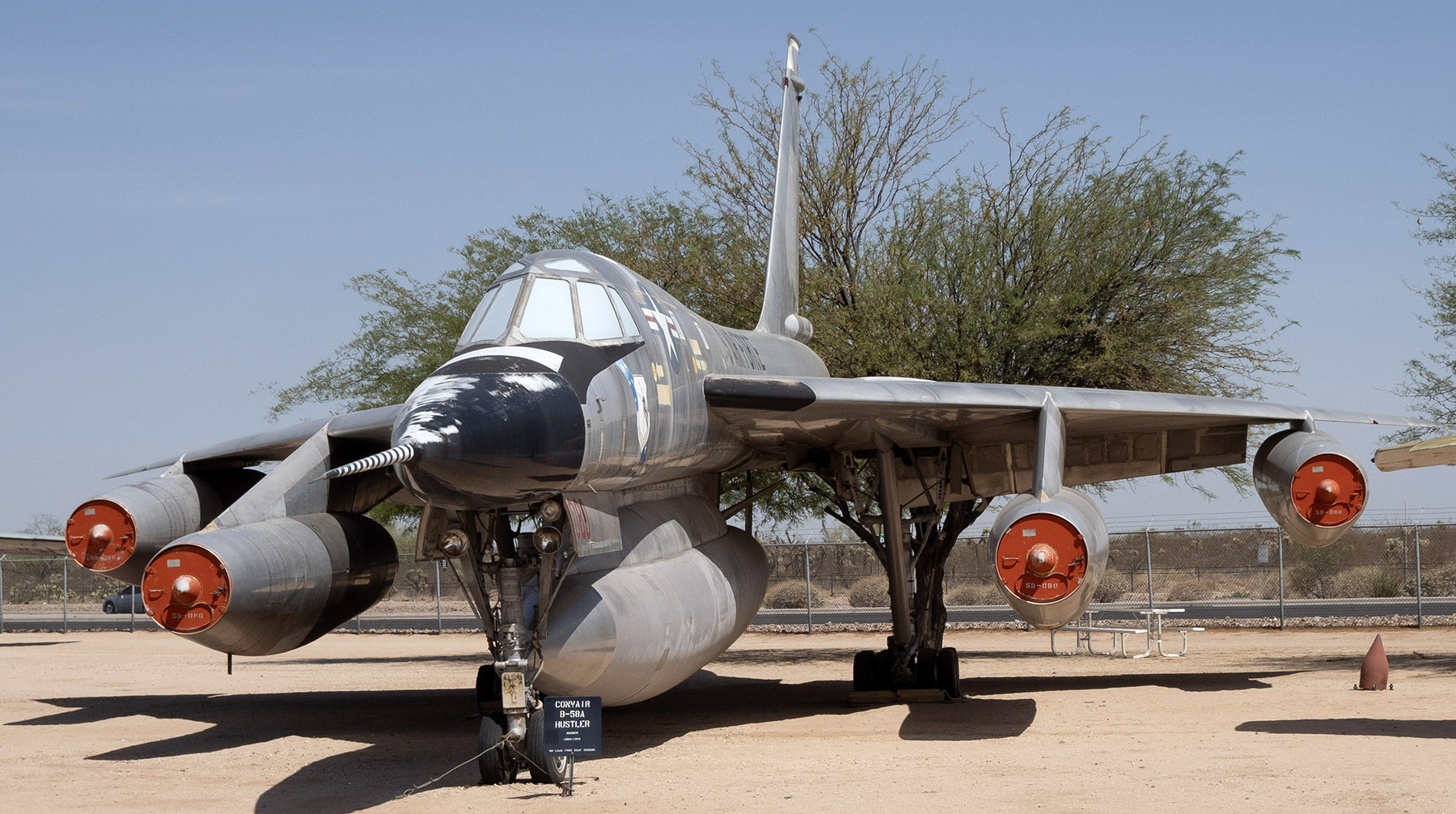 Convair B-58A Hustler was designed in 1949-52 to be a high speed, high altitude bomber to penetrate Soviet airspace and evade intercepter aircraft. It carried an external pod containing fuel and nuclear bomb and attained Mach 2 speed performance. 116 were built, and it was in service between 1960 and 1970. It was expensive to operate and required frequent air-to-air refueling. The Soviet development of high performance SAM's eliminated its potential effectiveness in high altitude bombing attacks. The museum's B-58A is the last one to come off the production line.
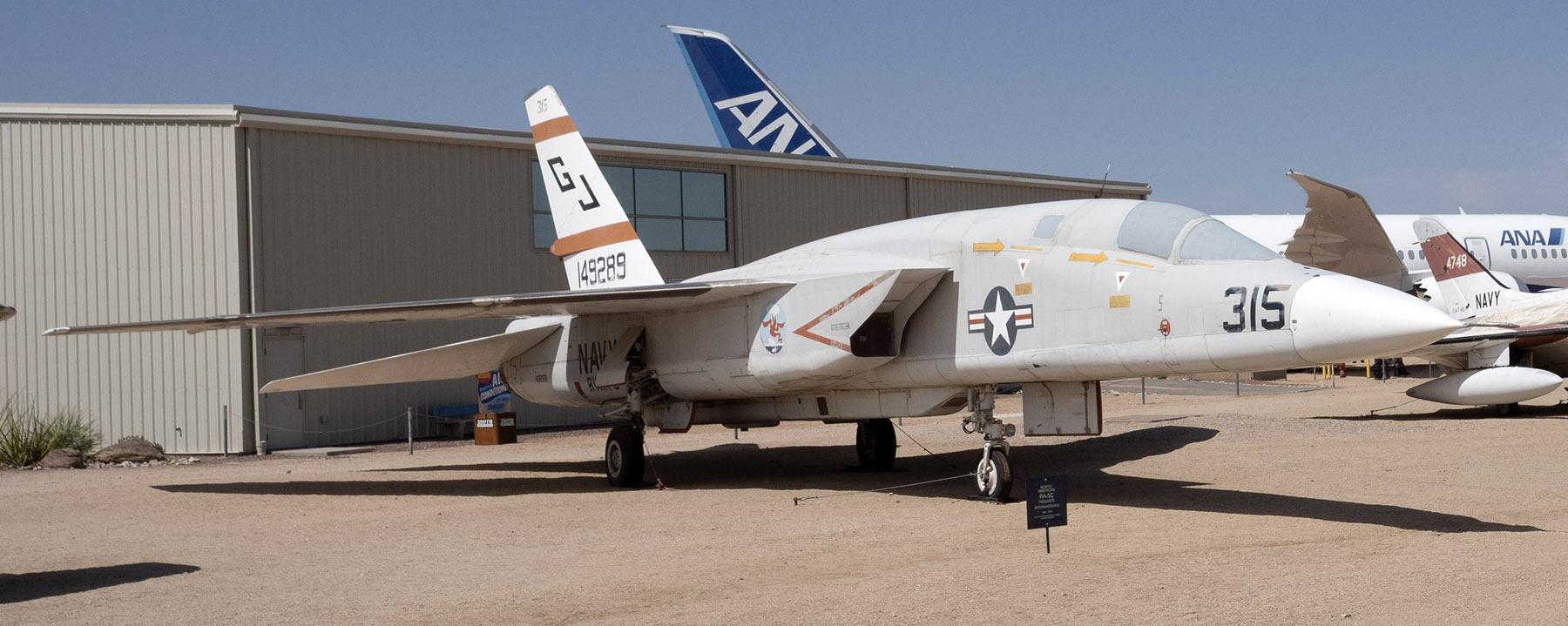 North American RA-5C Vigilante. It was initially designed in the late 1950's as a carrier-launched, nuclear-capable, supersonic attack bomber (designated A3J to replace the Douglas A3.) The US stategic shift from naval bombers to submarine-launched nuclear-tipped missles in the 60's resulted in most of the aircraft (137 of 167) being built or converted to photo reconnaissance versions and designated as RA-5C between 1961 and 1970. RA-5C's performed hazardous post-strike reconnaissance missions in the Vietnam war. The RA-5C was retired in 1979 since its mission could be completed by smaller modified fighter aircraft that were less complex and required less deck space (e.g., RF-8G, RF-4B).