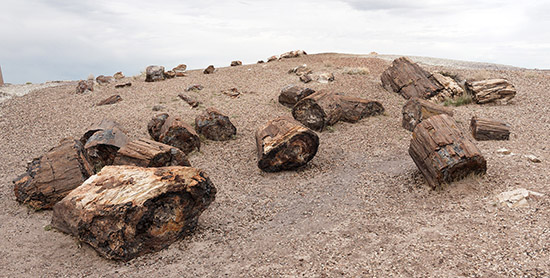
 Petrified trees in Petrified Forest National Park near Holbrook, AZ. These are fossilized remnants of trees that grew along rivers during the Triassic period (218 Ma). Fallen trees in water had organic molecules replaced by silica and other chemicals from ground water, and erosion uncovered the fossils. Petrified trees in Petrified Forest National Park near Holbrook, AZ. These are fossilized remnants of trees that grew along rivers during the Triassic period (218 Ma). Fallen trees in water had organic molecules replaced by silica and other chemicals from ground water, and erosion uncovered the fossils. |
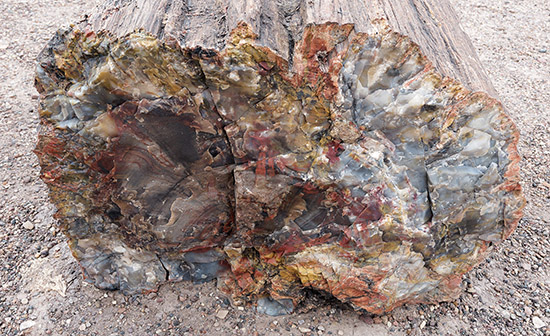 Petrified log end: White areas are pure quartz from silica replacement, black and grey areas contain manganese oxides and red, yellow, orange and purple areas contain iron oxides. Petrified log end: White areas are pure quartz from silica replacement, black and grey areas contain manganese oxides and red, yellow, orange and purple areas contain iron oxides.
|
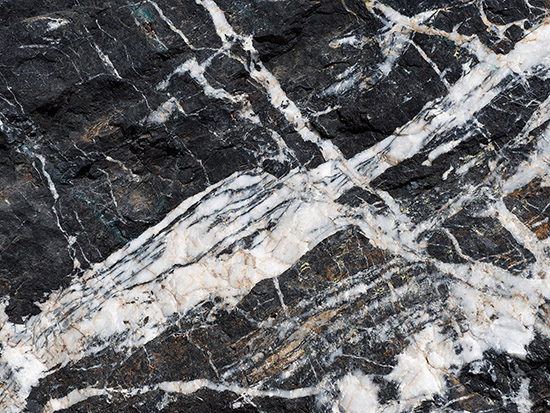 Black tourmaline and quartz veins from highway road cut along AZ 89 southwest of Prescott. This is Proterozoic metamorphic rock (1,174 Ma) of igneous origin. Black tourmaline and quartz veins from highway road cut along AZ 89 southwest of Prescott. This is Proterozoic metamorphic rock (1,174 Ma) of igneous origin. |
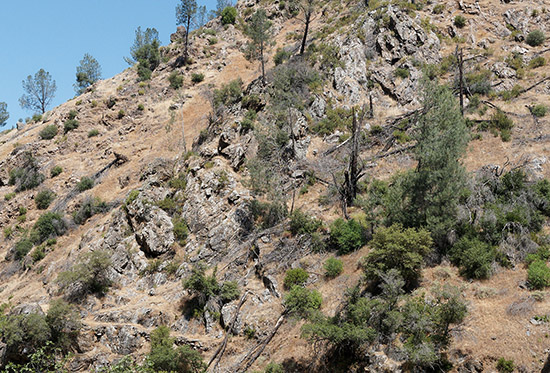 Folded and distorted strata of radiolarian chert which is part of the Calaveras Complex of Proterozoic metamorphic rock along the banks of the Merced River next to CA140 between El Portal and Mariposa. Folded and distorted strata of radiolarian chert which is part of the Calaveras Complex of Proterozoic metamorphic rock along the banks of the Merced River next to CA140 between El Portal and Mariposa. |
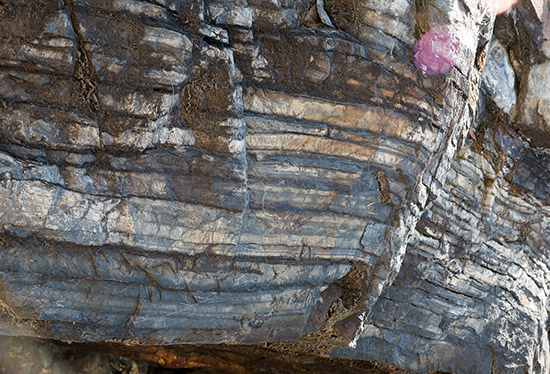 Closeup of banded radiolarian chert which formed on the deep ocean floor away from sedimentary deposits where dying radiolarian single cell eukaryotes deposited their silica shells to form an ooze-like substance that subsequently was subjected to pressure and heat to become banded chert. Closeup of banded radiolarian chert which formed on the deep ocean floor away from sedimentary deposits where dying radiolarian single cell eukaryotes deposited their silica shells to form an ooze-like substance that subsequently was subjected to pressure and heat to become banded chert. |
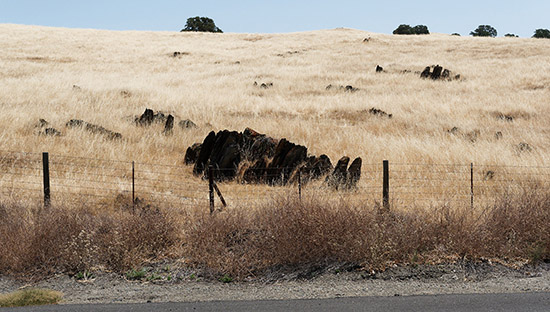 Tombstone arrays of black shale along CA 140 between Mariposa and Merced which is part of the Jurassic Foothills belt. Tombstone arrays of black shale along CA 140 between Mariposa and Merced which is part of the Jurassic Foothills belt.
|
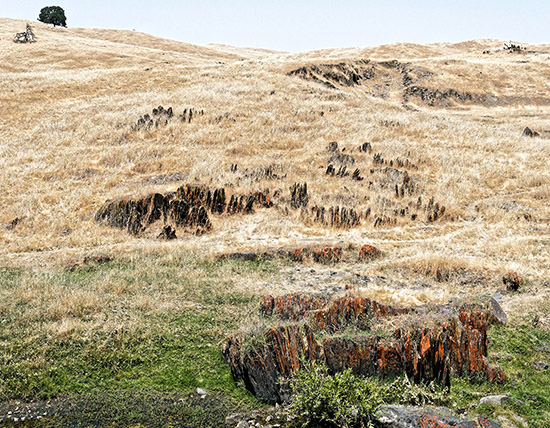 End on view of layers of black slate oriented vertically in a wild oats field along CA 140. End on view of layers of black slate oriented vertically in a wild oats field along CA 140. |
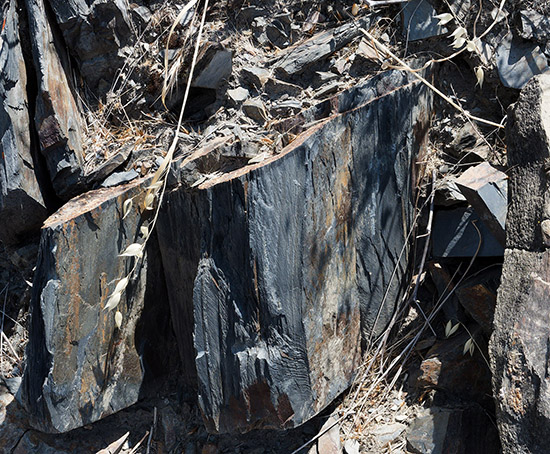 Detail of black slate. The original sedimentary mudstones were deposited on the ocean floor during the Jurassic Period (~160 Ma) and then heated and recrystallized to slate as they were jammed into the Sierran trench during ocean plate subduction below the North American plate. Detail of black slate. The original sedimentary mudstones were deposited on the ocean floor during the Jurassic Period (~160 Ma) and then heated and recrystallized to slate as they were jammed into the Sierran trench during ocean plate subduction below the North American plate. |
|
|
|
|
| |
|
| |
|
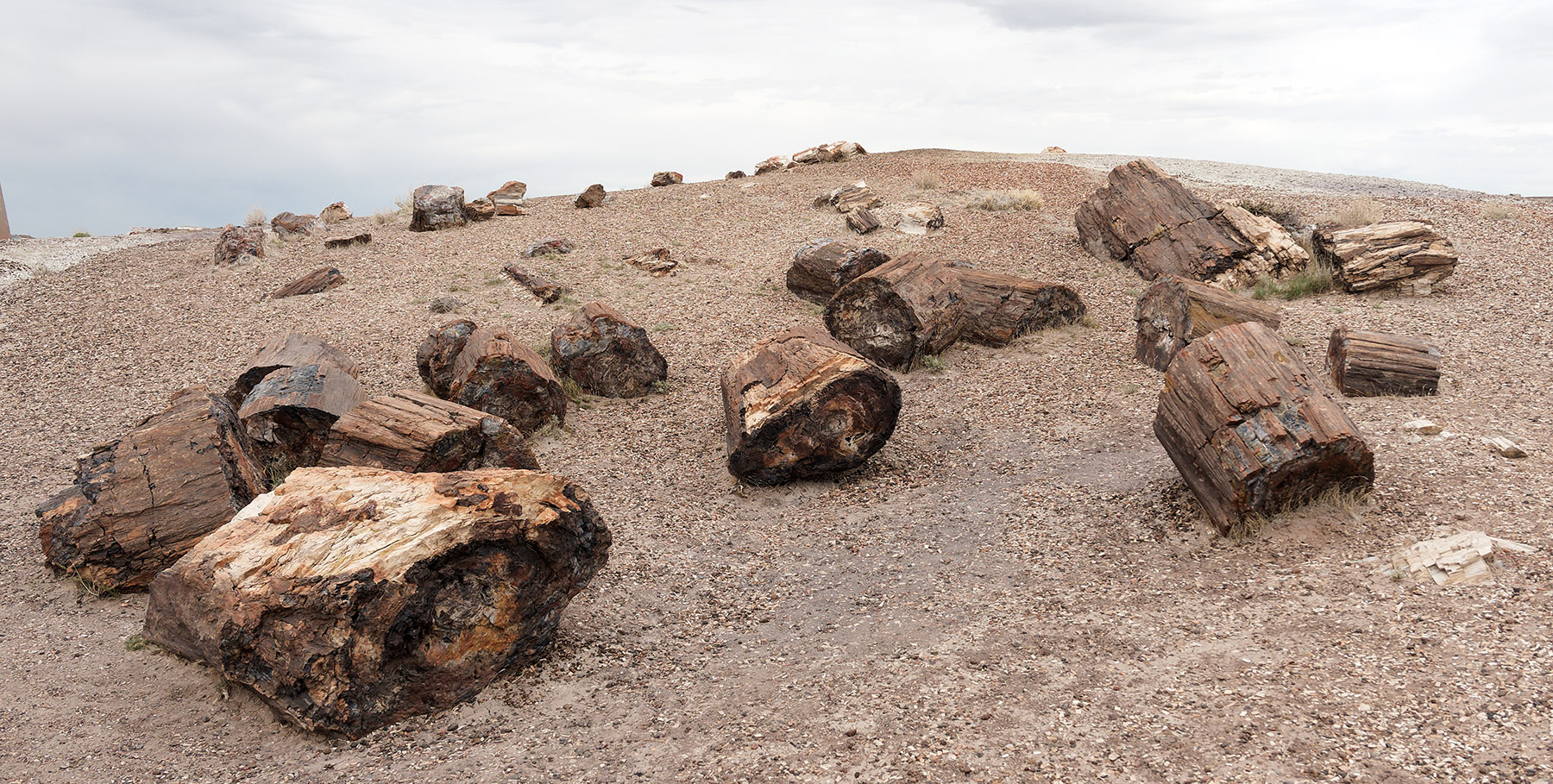 Petrified trees in Petrified Forest National Park near Holbrook, AZ. These are fossilized remnants of trees that grew along rivers during the Triassic period (218 Ma). Fallen trees in water had organic molecules replaced by silica and other chemicals from ground water, and erosion uncovered the fossils.
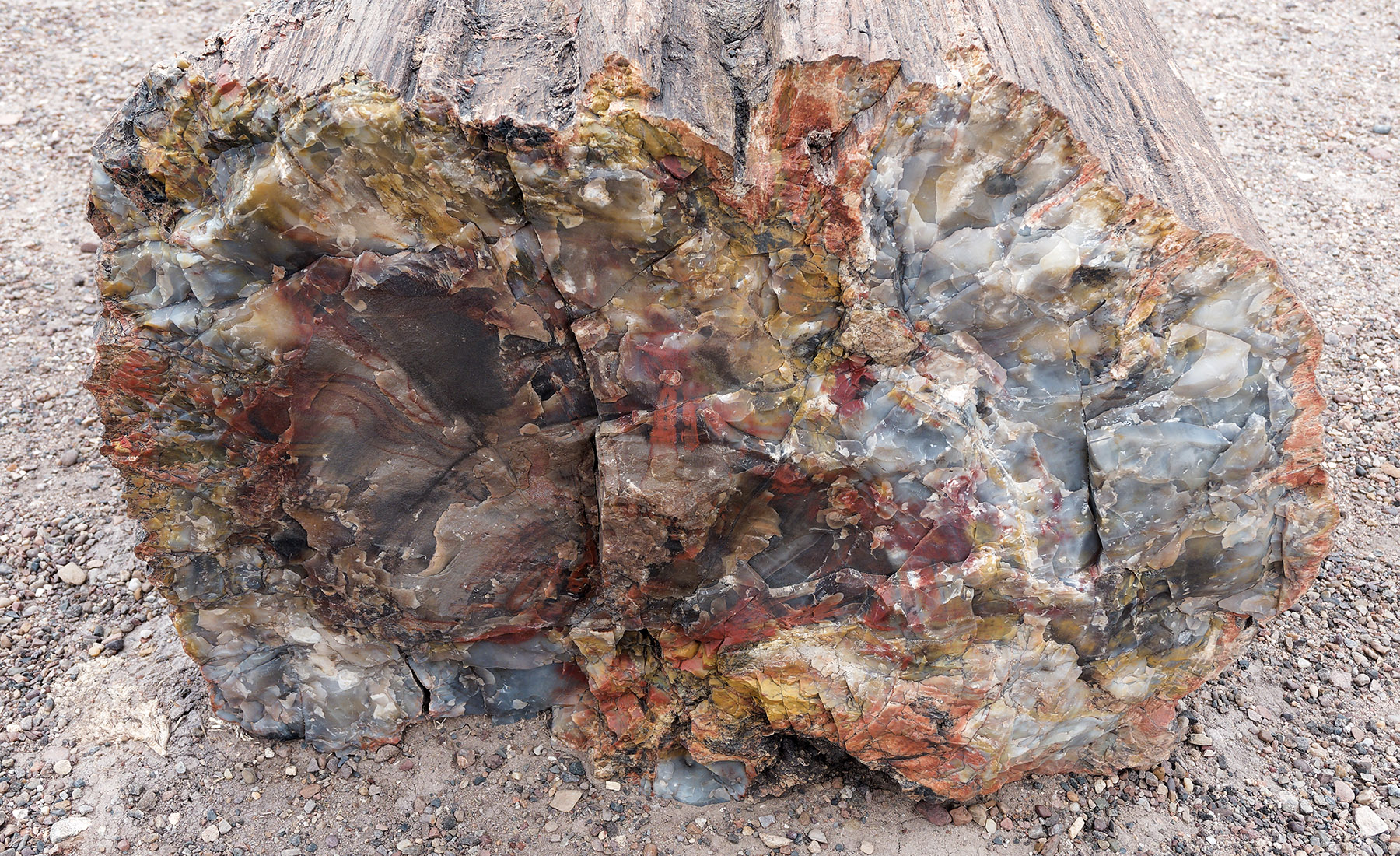 Petrified log end: White areas are pure quartz from silica replacement, black and grey areas contain manganese oxides and red, yellow, orange and purple areas contain iron oxides.
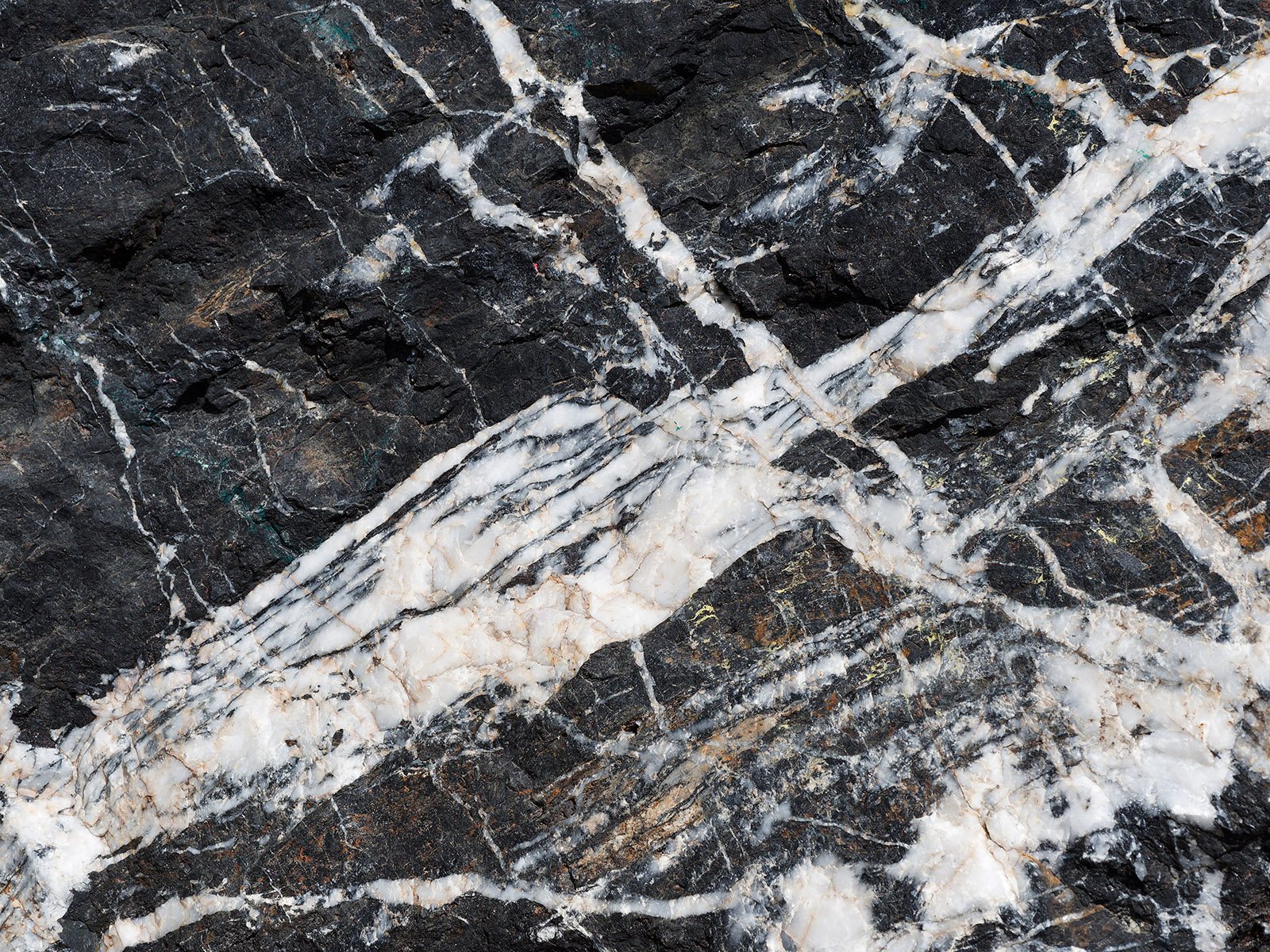 Black tourmaline and quartz veins from highway road cut along AZ 89 southwest of Prescott. This is Proterozoic metamorphic rock (1,174 Ma) of igneous origin.
 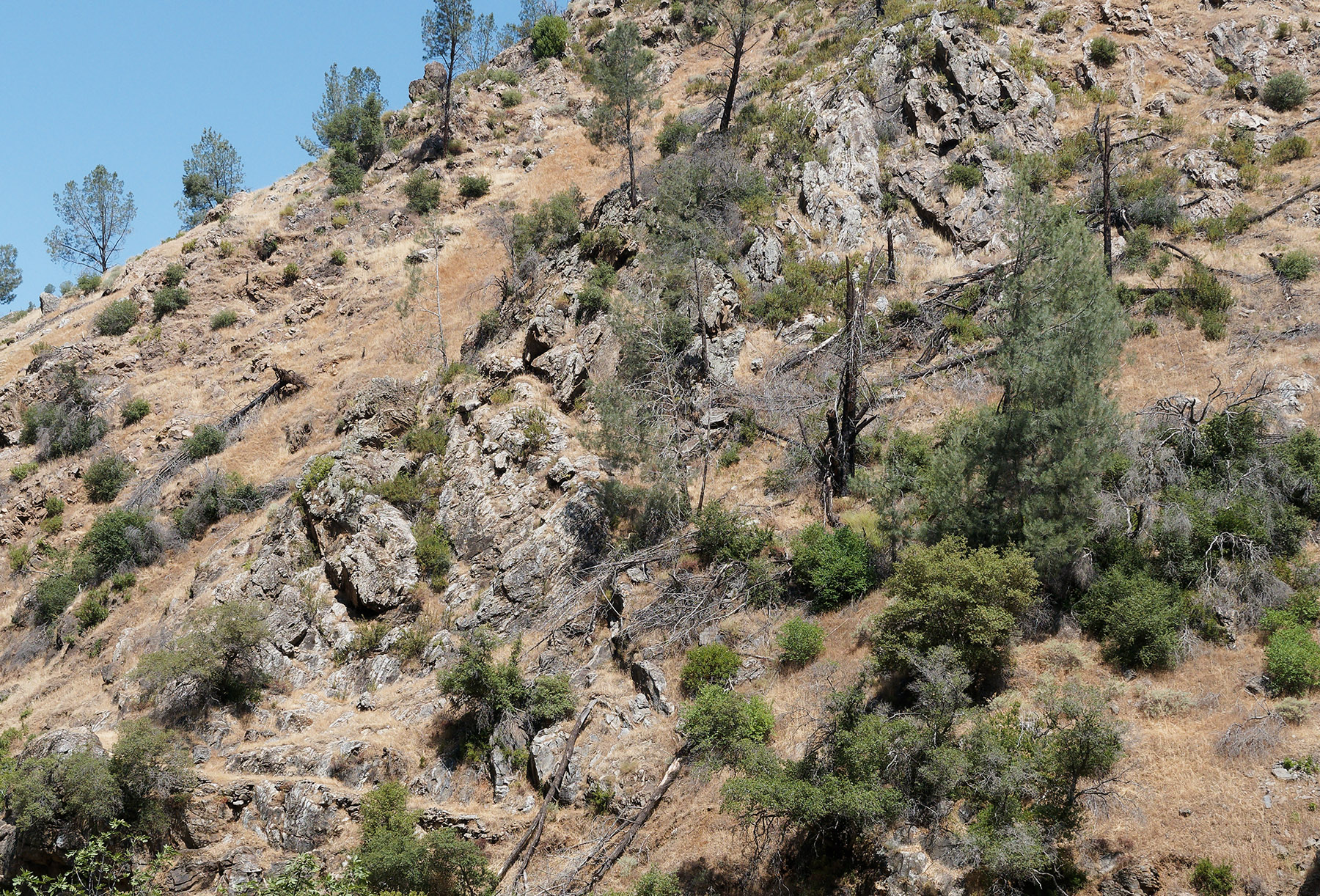 Folded and distorted strata of radiolarian chert which is part of the Calaveras Complex of Proterozoic metamorphic rock along the banks of the Merced River next to CA140 between El Portal and Mariposa.
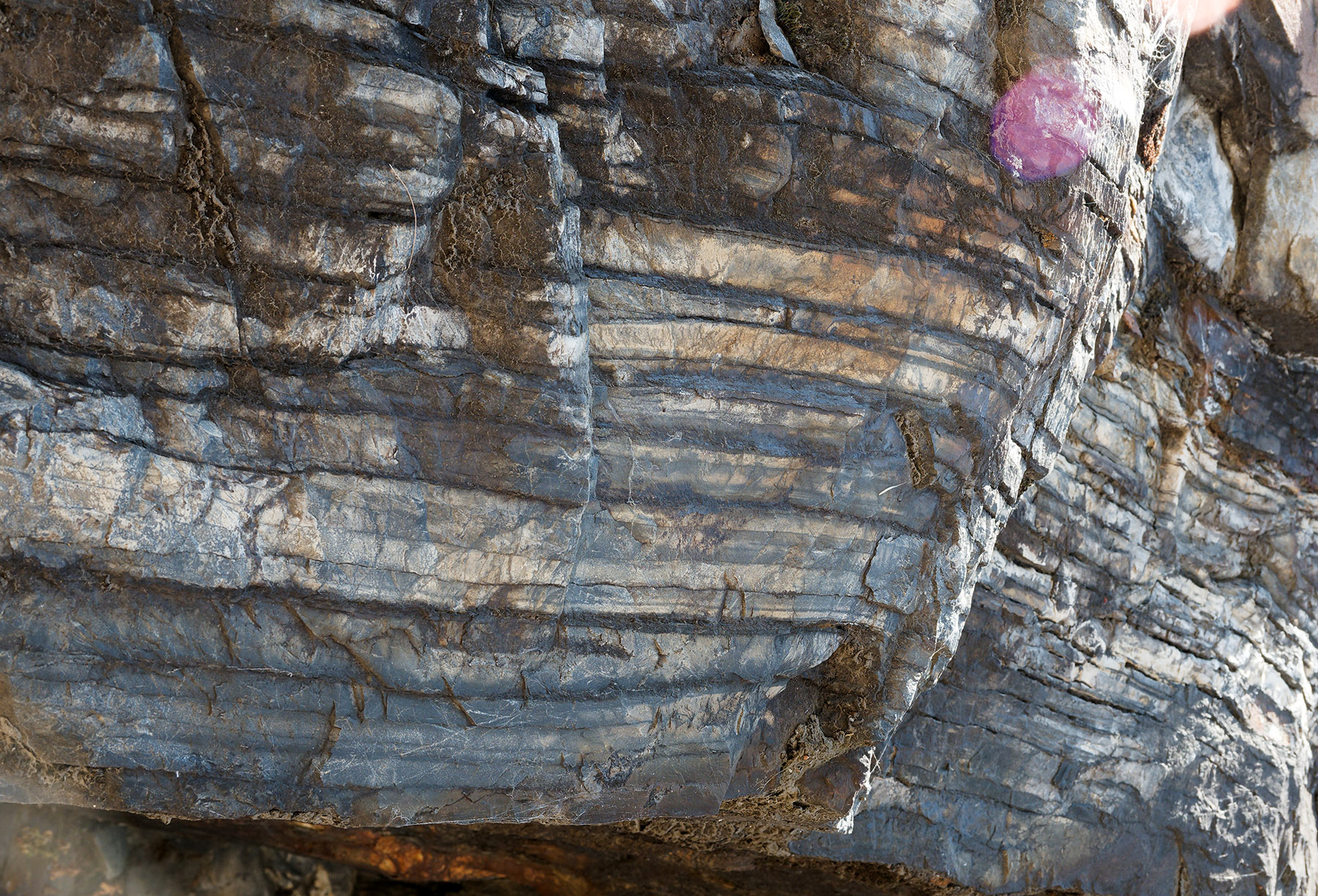 Closeup of banded radiolarian chert which formed on the deep ocean floor away from sedimentary deposits where dying radiolarian single cell eukaryotes deposited their silica shells to form an ooze-like substance that subsequently was subjected to pressure and heat to become banded chert.
 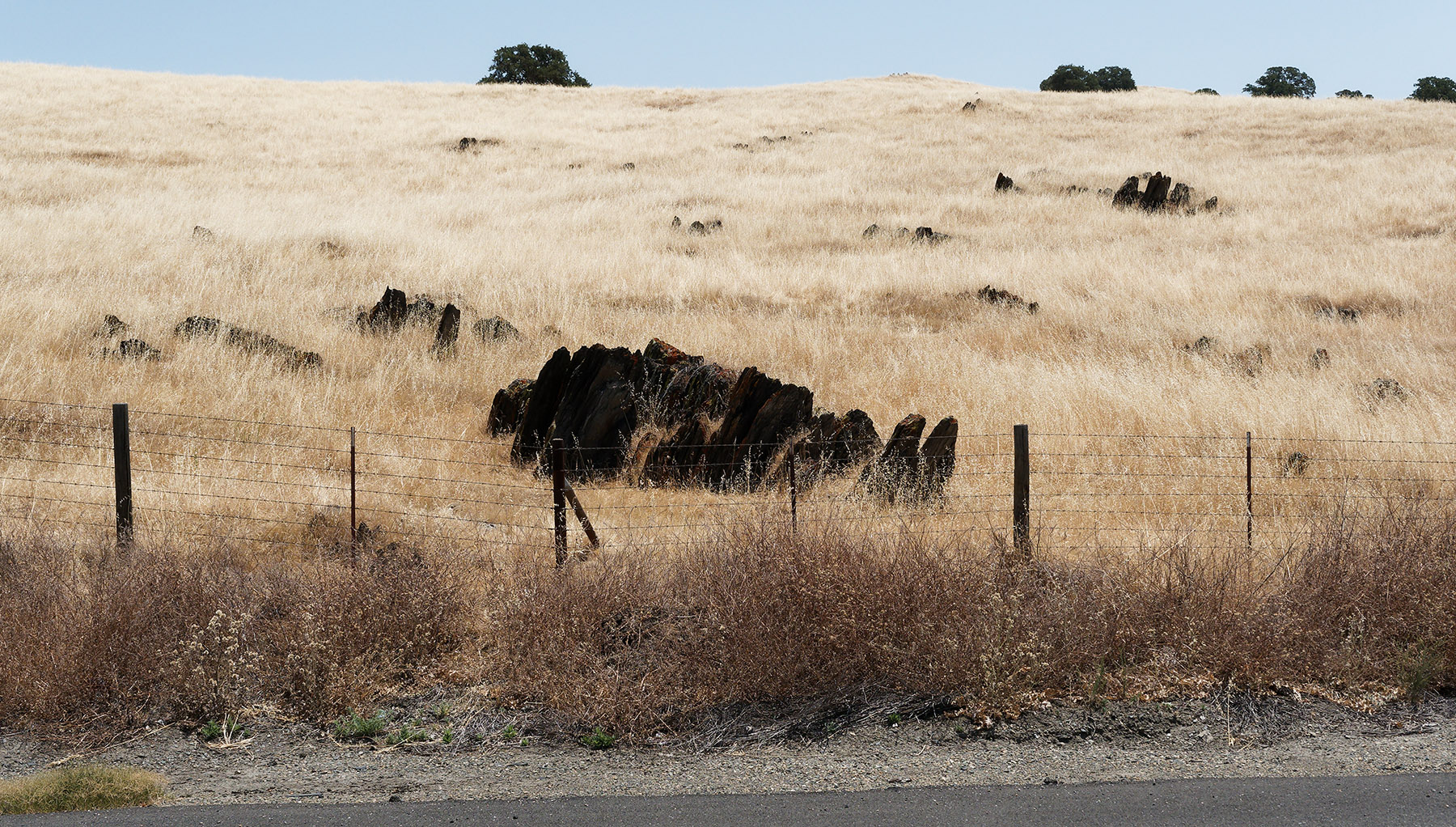 Tombstone arrays of black shale along CA 140 between Mariposa and Merced which is part of the Jurassic Foothills belt.
 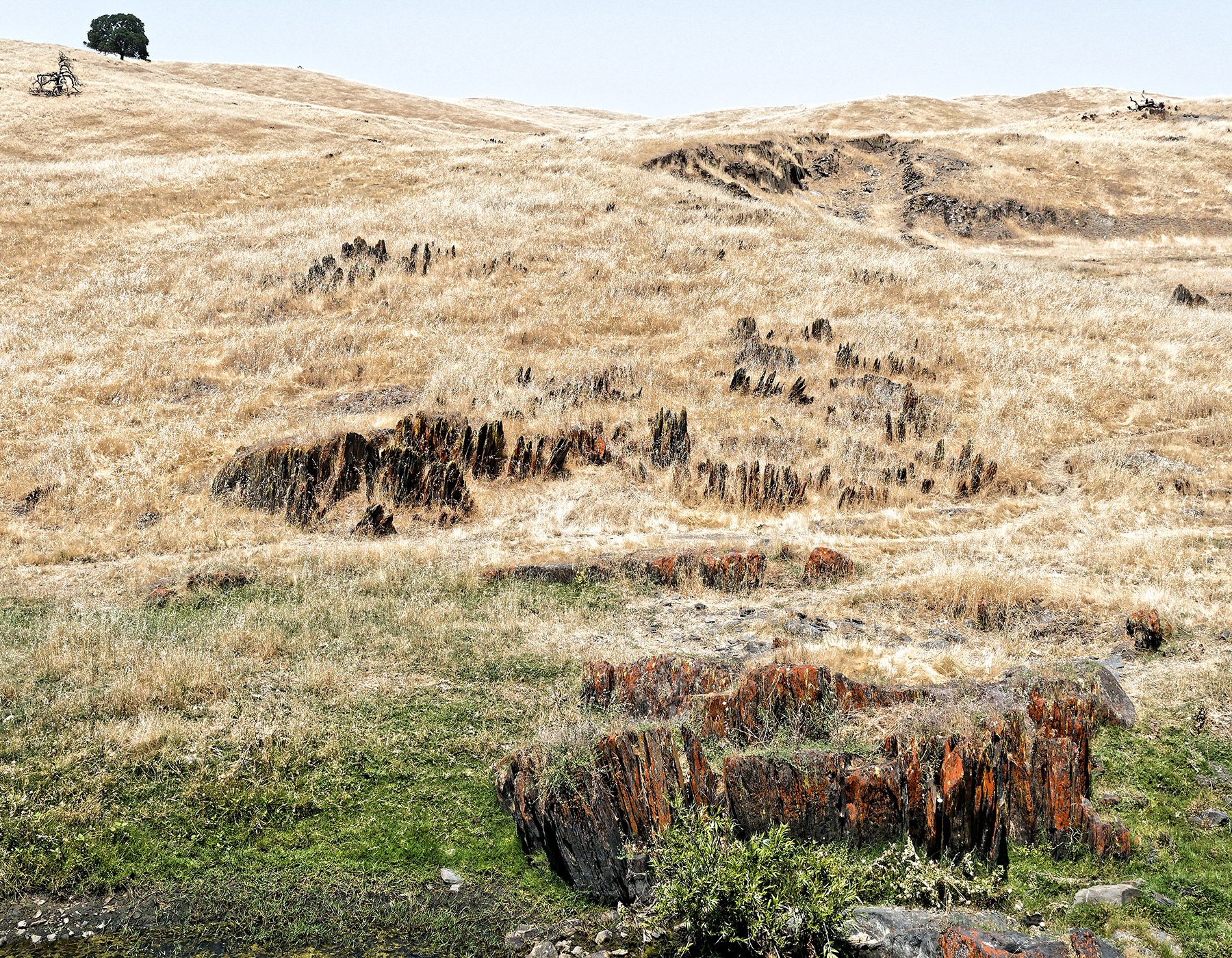 End on view of layers of black slate oriented vertically in a wild oats field along CA 140.
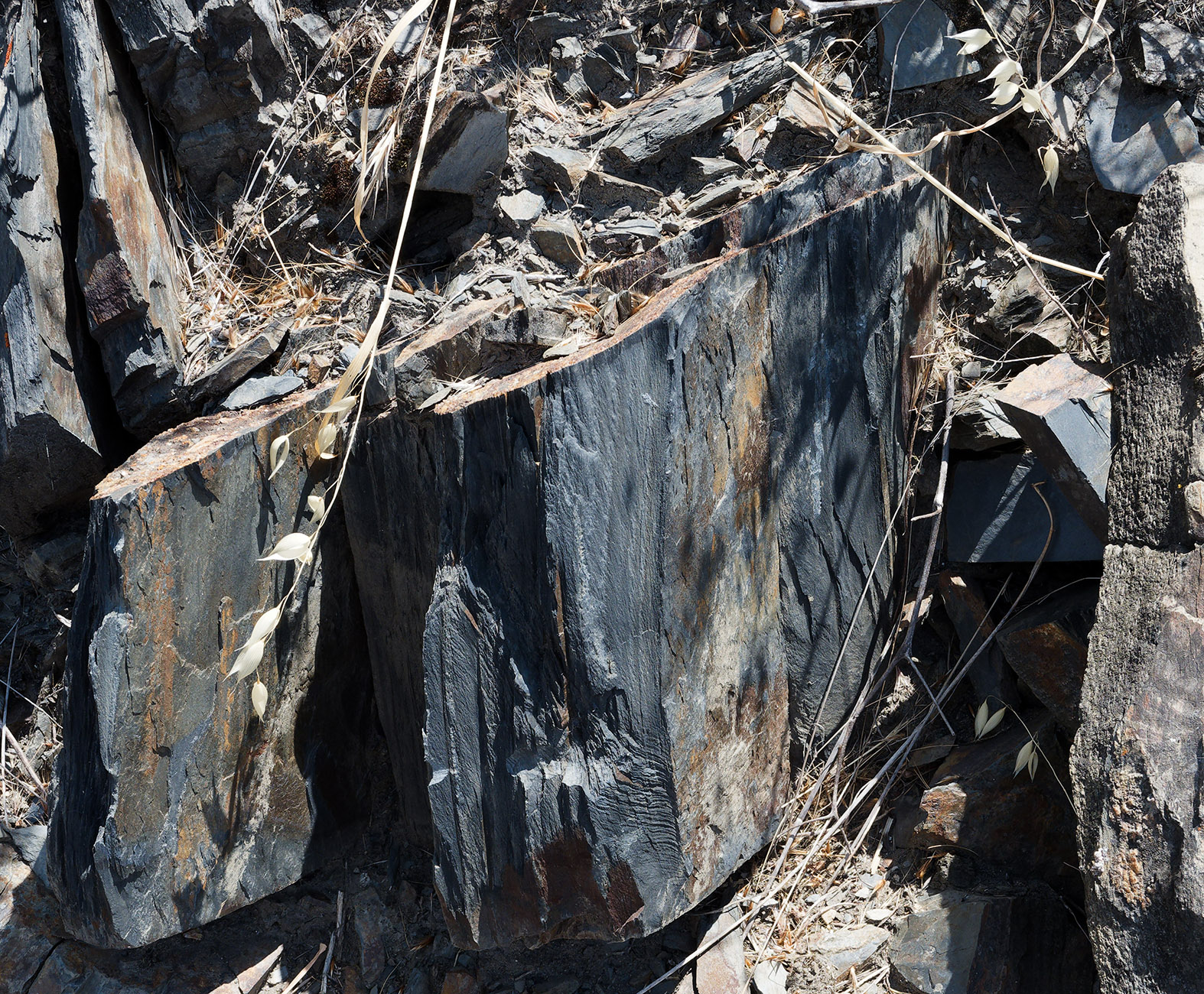 Detail of black slate. The original sedimentary mudstones were deposited on the ocean floor during the Jurassic Period (~160 Ma) and then heated and recrystallized to slate as they were jammed into the Sierran trench during ocean plate subduction below the North American plate.